Replacing an outdated or mismatched door
If the current door is the wrong type for the way the bay is used—frequent cycles, forklifts, or delivery schedules—installation can reduce chronic wear that drives repeat service calls.
Serving Levittown, New York & surrounding areas
Calls answered around the clock
Describe your door, opening, and usage once, and we'll connect you with a local Levittown-area contractor who installs and repairs commercial overhead doors.
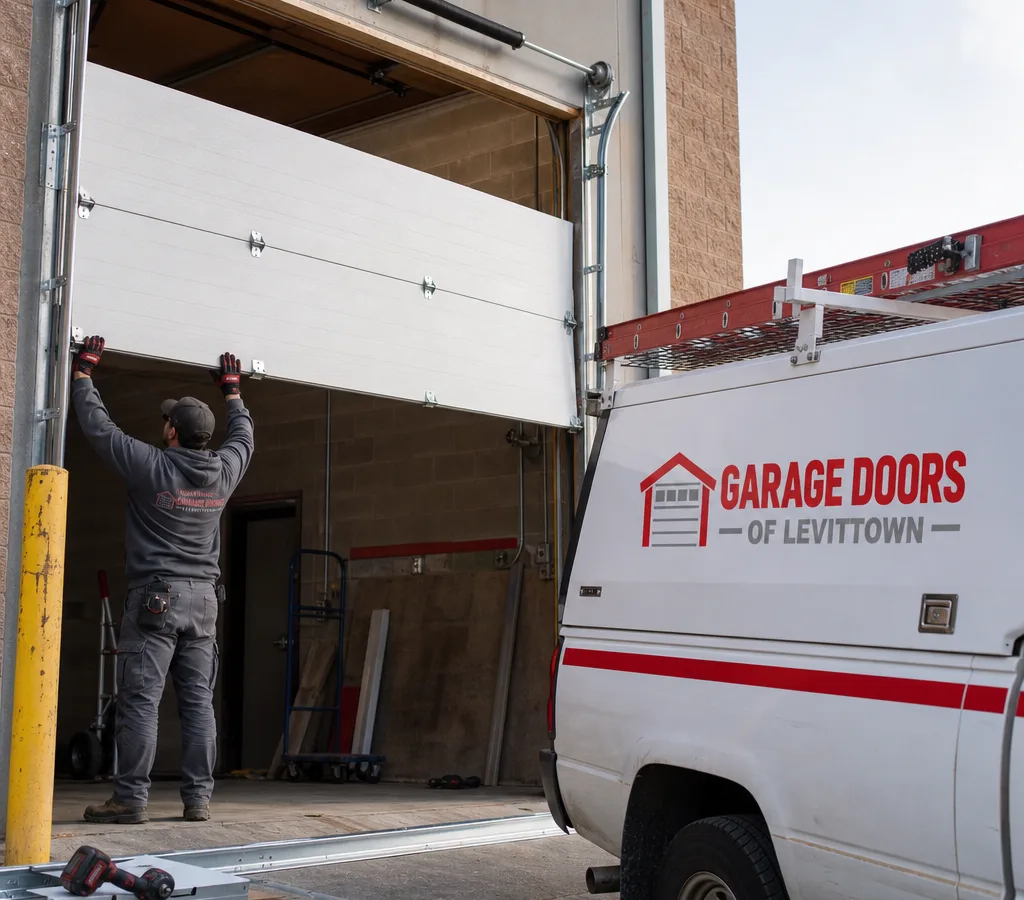
Commercial garage door installation is more than swapping panels. A contractor has to match the door type, track layout, hardware, and operator to how the opening is used, how often the door cycles, and what the building needs for security and access.
A typical installation scope includes:
In Levittown and the surrounding Nassau County area, many commercial buildings have limited headroom or older framing around service bays. That can affect whether standard lift, high lift, or a different track design is the cleanest fit. The contractor will typically start by asking for rough opening size, ceiling height, and what's above the opening, such as sprinkler lines, beams, or ductwork.
If the current door is the wrong type for the way the bay is used—frequent cycles, forklifts, or delivery schedules—installation can reduce chronic wear that drives repeat service calls.
Roll up doors with recurring curtain damage, worn guides, or persistent binding may need more than patch repairs. A contractor can compare repairability with replacement-parts availability.
A new door often pairs with an operator change, especially if the current motor is undersized, the mounting location is awkward, or controls need updating for day-to-day access.
Many “door won't stay up” problems come back to spring sizing, track geometry, and a door that isn't square. Installation is a chance to reset the whole system correctly.
Commercial doors work hard. Setting up the right hardware and maintenance schedule up front helps reduce downtime from roller wear, hinge cracking, or loose fasteners.
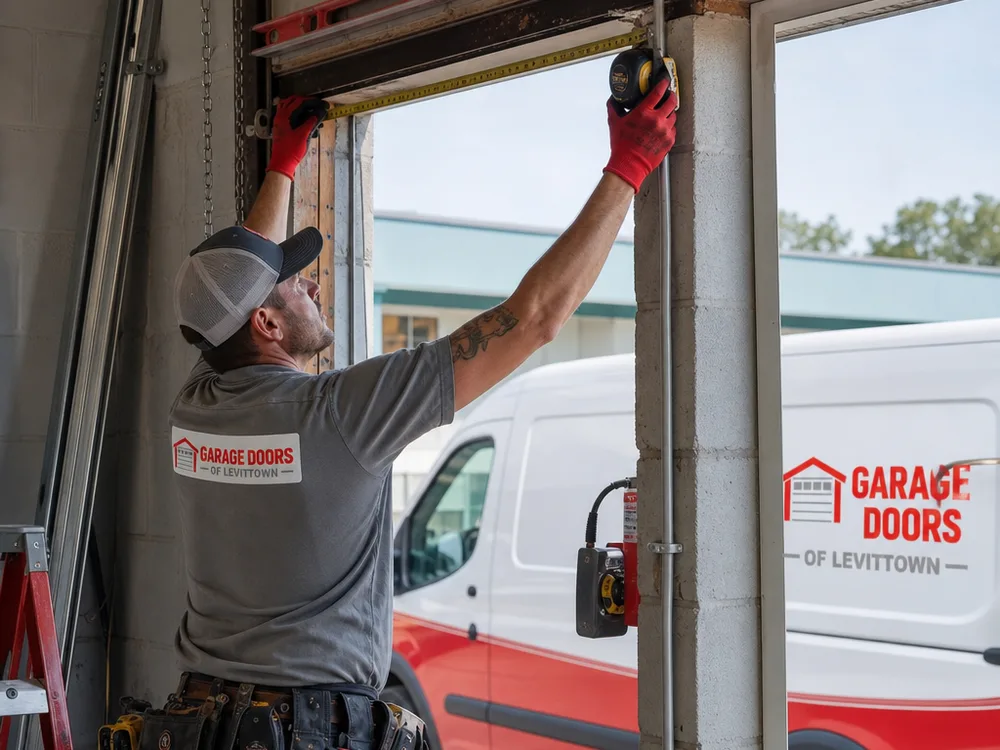
Expect questions about opening size, ceiling height, daily cycles, vehicle clearance, and whether the door serves deliveries, storage access, or active loading.
The contractor matches sectional or rolling steel construction, insulation, windows, and standard, high-lift, or vertical-lift track to the available space and traffic.
Old tracks, springs, and operators are removed. The jambs and header are checked for secure mounting points and conditions that could throw the new track out of square.
Tracks and hardware go in first, followed by sections or the rolling curtain and then the torsion system. The door is balanced before relying on an operator.
Operator travel limits and force settings are adjusted, the door is cycled repeatedly, and safety sensors and control stations are checked.
If you're dealing with a door that's unreliable, undersized for the opening, or constantly needing service, describe the opening and how the door is used once and we'll connect you with a local contractor who handles commercial installs and repairs.
CALL NOW: (516) 450-4380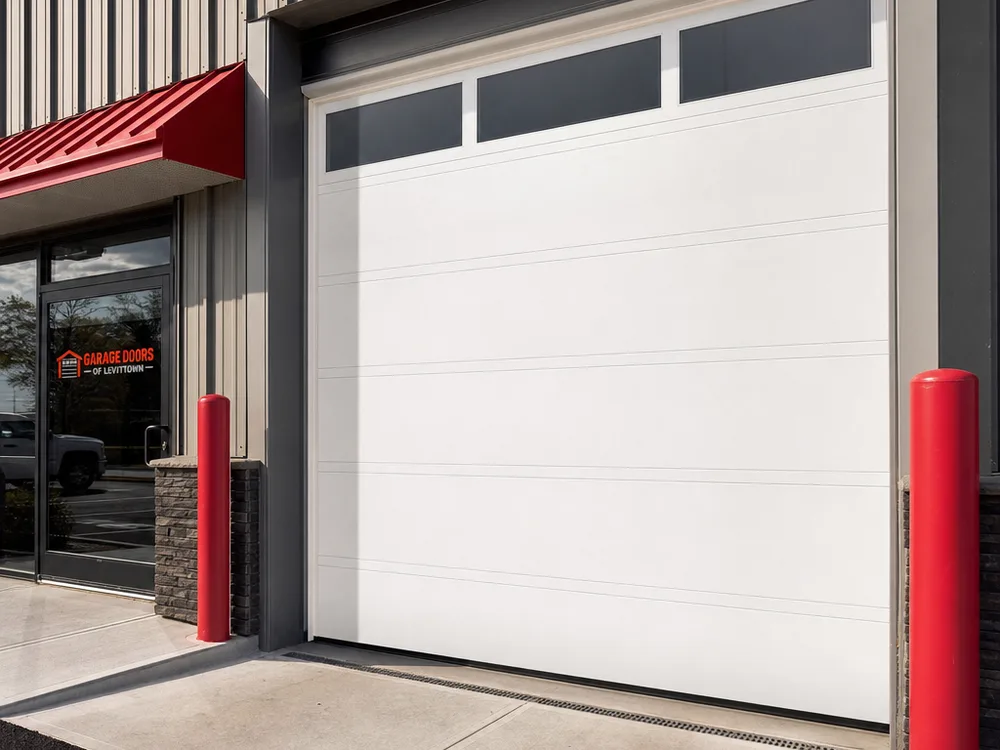
Having the opening width and height, approximate ceiling height, and how the door is used—deliveries, fleet vehicles, or storage—helps the contractor narrow down door type, track style, and operator needs. It also helps to note whether the current setup is sectional or rolling steel and what triggered the call.
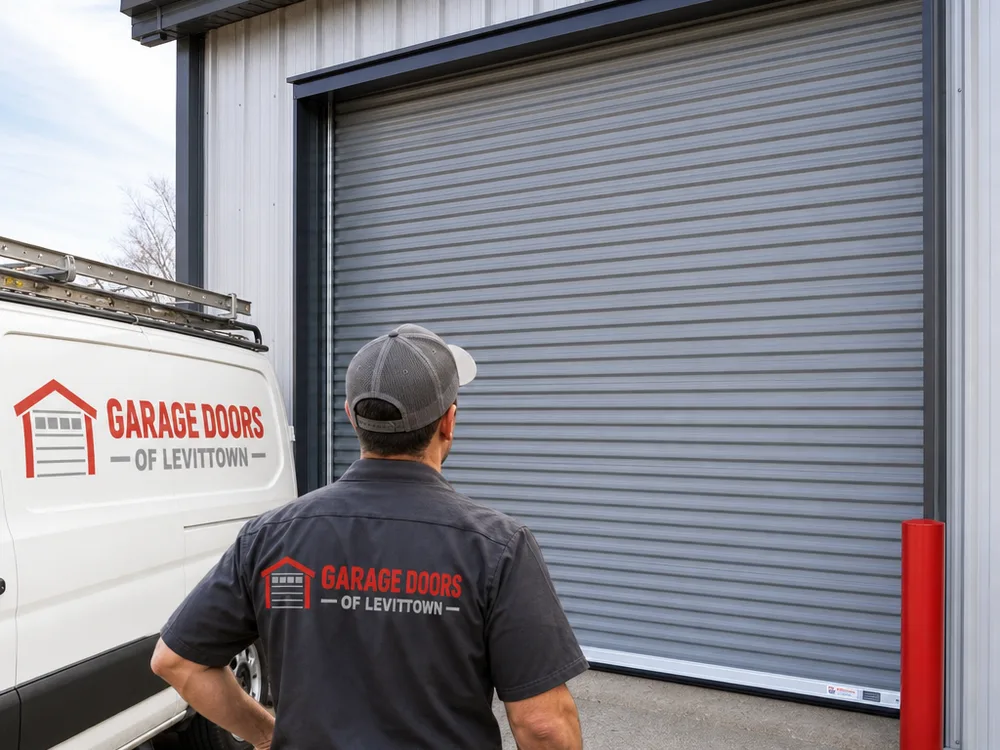
The best door type depends on space and use. Sectional doors run on tracks and need backroom for horizontal track, while rolling steel doors coil into a barrel above the opening. The contractor will weigh headroom, sideroom, security, and cycle frequency.
Recurring issues often come from misalignment, damaged guides, a bent bottom bar, worn bearings, or an impacted curtain that no longer tracks cleanly. The contractor may also look for opening-plumb issues, mounting movement, or hardware mismatched to the door's weight and cycle demands.
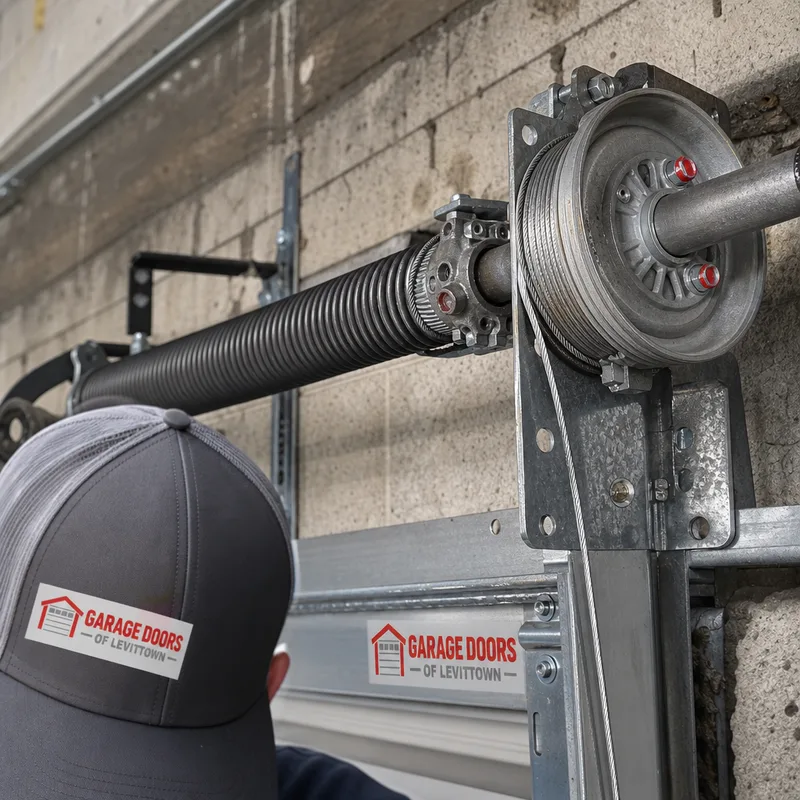
Spring selection is based on door weight and lift configuration so the door stays balanced through its travel. A contractor also evaluates drum size, cable condition, shaft and bearing support, and reinforcement points so the counterbalance and track hardware work together.
Repair usually focuses on restoring travel and sealing through track alignment, roller or hinge replacement, cable resetting, panel work, or operator service. Replacement may be considered when there is major structural damage, ongoing binding, or the system cannot support the required cycle rate or clearance.
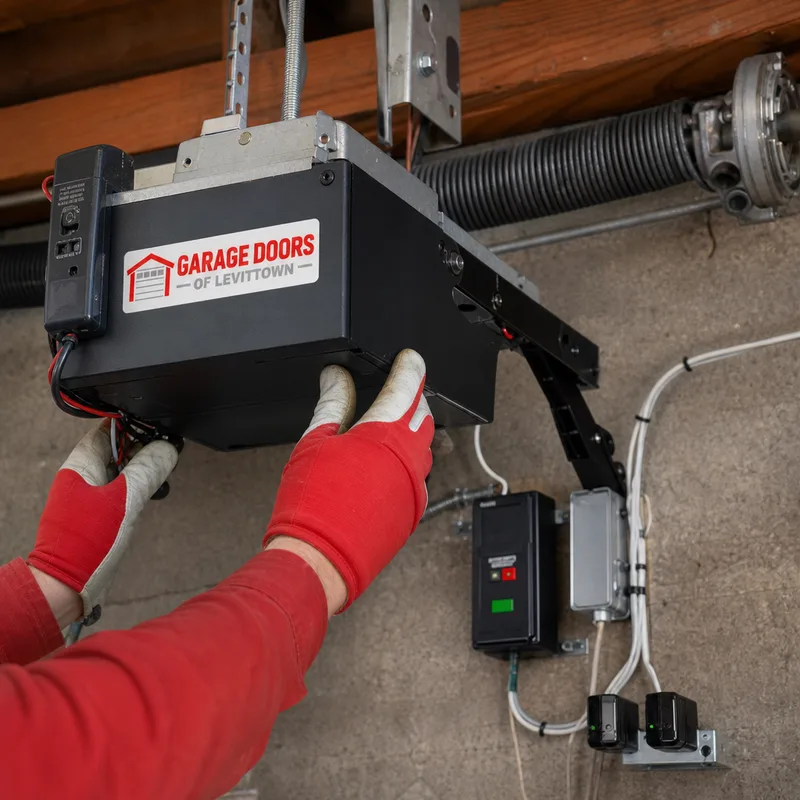
Yes. A commercial door and operator act as a system. The contractor may check operator mounting, limit settings, force settings, safety devices, and mechanical drag in the door that makes the motor work harder than it should.
Installation usually starts with protecting the work area, removing old components, and confirming the opening is square enough for the new track. The track, door, springs, and operator are installed and adjusted, followed by test cycles and checks of travel, balance, and safety devices.
Yes. Describe whether the door is stuck open, off track, has damaged panels, or has operator issues, and we can connect you with a local contractor who handles commercial garage door repair in Levittown as well as replacement when repair is not the right fit.
Tell us what kind of opening you have and what the door needs to handle day to day, and we'll connect you with a local contractor who can assess the setup and talk through options directly with you.